

Talk To Our Experts
905-305-9955[Blogs]
Modular Office Furniture: The Smart Way to Build a Flexible Workspace
Aug 17 2026
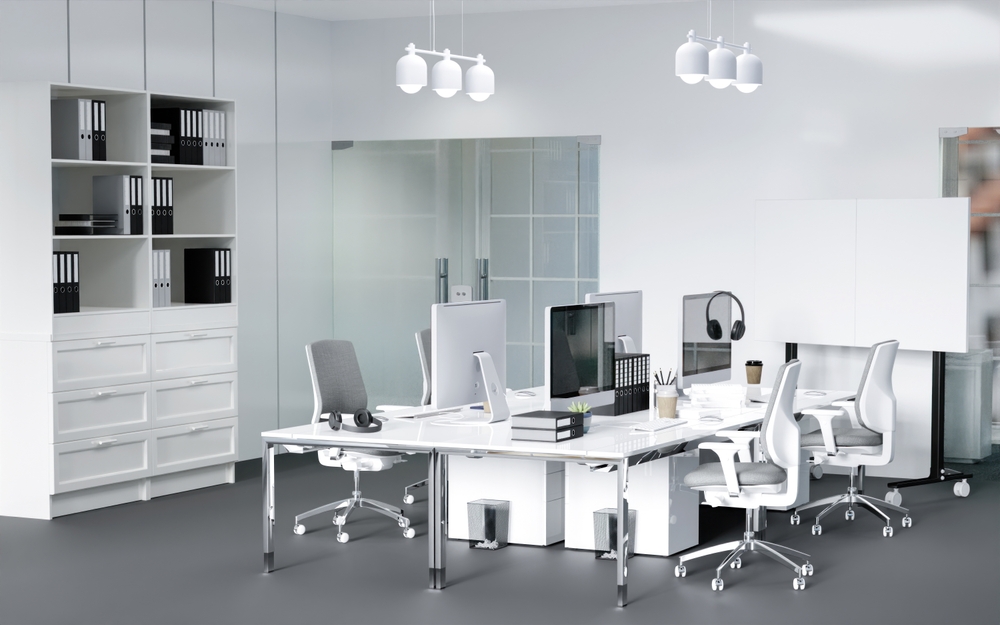
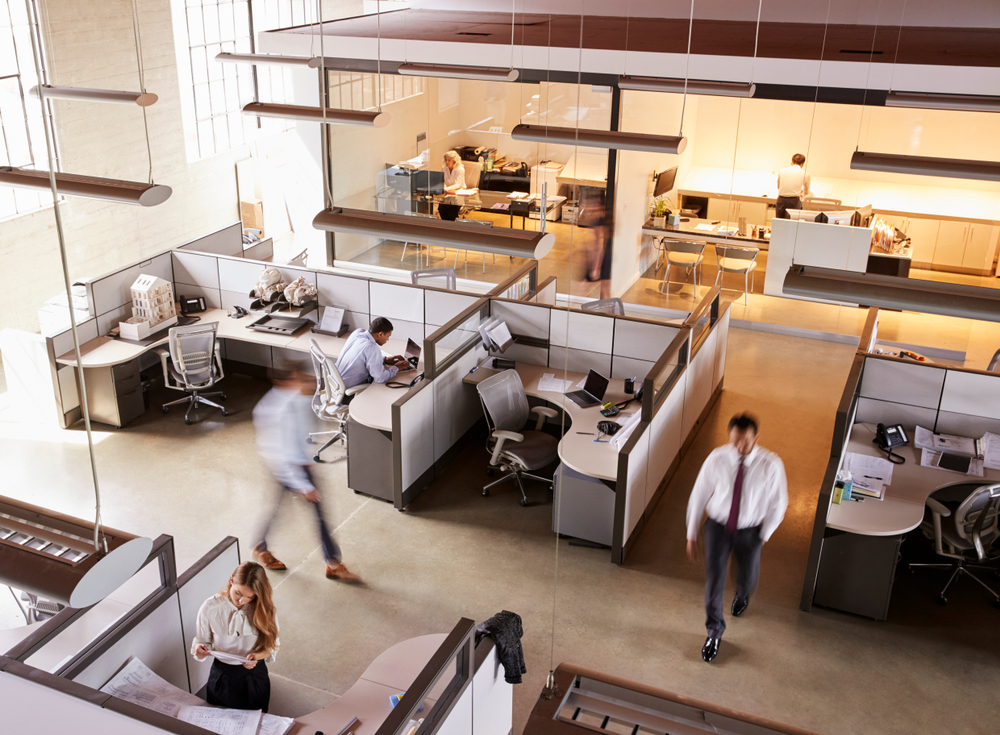
Businesses across Ontario are rethinking how their offices are built, and modular office furniture is at the center of that shift. Instead of committing to a fixed layout that becomes outdated the moment a team grows or a workflow changes, more companies are choosing furniture systems that can be reconfigured, expanded, or relocated without a full renovation. Modular office furniture gives businesses the flexibility to adapt their workspace as needs evolve, whether that means adding new workstations, redesigning a collaboration area, or supporting a hybrid team.
For business owners, office managers, and facilities teams planning a new office or upgrading an existing one, understanding how modular systems work is the first step toward building a workspace that keeps pace with the business.
What Is Modular Office Furniture?
Modular office furniture refers to furniture systems built from independent, interchangeable components that can be combined, rearranged, or expanded to suit changing needs. Rather than purchasing fixed desks, permanent walls, or single-purpose storage units, businesses invest in components such as workstations, partitions, tables, and storage pieces that connect and reconfigure using a shared framework.
The defining feature of modular office furniture is adaptability. A benching system can be extended as headcount grows. A partition wall can be moved to create a private meeting room one month and an open collaboration zone the next. A modular table can be split into smaller units for breakout sessions or joined together for an all-hands meeting. This building block approach means a business is never locked into a single configuration.
Modular systems also tend to share a common design language and hardware, which keeps the office looking cohesive even as the layout changes. This is different from simply buying similar furniture pieces over time. True modular office furniture is engineered so that components fit together consistently, making reconfiguration fast and predictable rather than a custom project every time.
At The Office Shop, this approach is central to how we help Ontario businesses plan their workspaces. Our space planning and design team works with clients to determine which modular components will support both current operations and future growth, so the furniture investment continues to pay off well beyond the initial installation.
Curious whether your current office layout could benefit from a modular approach? Contact The Office Shop to discuss a workspace assessment tailored to your business.
Why Businesses Across the GTA Are Switching to Modular Systems
The shift toward modular office furniture is not a passing trend. It reflects real changes in how businesses operate, how teams work, and how office space is valued.
Cost Savings Over Time
Traditional office furniture is typically purchased as a complete, fixed set. When a business grows or a layout stops working, the entire setup often needs to be replaced. Modular office furniture avoids this cycle. Because components are interchangeable, businesses can add, remove, or upgrade individual pieces without replacing an entire system.
A company that needs six additional workstations can extend an existing benching run rather than purchasing a new suite of furniture. This targeted approach reduces material waste and keeps long-term furniture costs more predictable.
Faster Reconfiguration With Less Downtime
Office renovations built around fixed walls and custom millwork can take weeks and require significant disruption to daily operations. Modular office furniture is designed to be disassembled, moved, and reassembled with basic tools, often in a fraction of the time. For businesses that cannot afford extended downtime, this matters.
A weekend reconfiguration is realistic with a modular system, while a traditional buildout rarely is. Our office installation and reconfiguration team regularly manages these projects for clients who need a layout updated without pausing operations.
Support for Hybrid and Growing Teams
Hybrid work has changed how much space businesses actually need on any given day, and how that space needs to function. Modular office furniture allows a company to shift between open collaboration areas, shared workstations, and private focus zones as attendance patterns change throughout the week. Instead of designing for a single static headcount, businesses can design for flexibility, which better reflects how teams actually use the office in 2026.
→ Wondering how a modular layout could reduce your renovation timeline? Reach out to The Office Shop for a consultation on your next office project.
Best Modular Office Furniture to Consider
A complete modular office furniture system typically includes several categories of components, each designed to work together within the same layout.
Modular Desks and Workstations
Modular workstations and benching systems form the foundation of most office layouts. These systems allow businesses to configure individual desks, shared benching runs, or clustered team pods using the same underlying components.
Height-adjustable options can be integrated into the same modular framework, giving employees ergonomic flexibility without disrupting the overall layout. As teams grow, additional workstations can be added to an existing run rather than requiring a full desk replacement.
Many businesses start their modular office furniture project with workstations because the desk layout has the biggest impact on how a floor plan feels day to day. A benching system that seemed spacious for a team of eight can quickly feel cramped once the department grows to fourteen, and traditional desks would require a full replacement to fix that. With a modular approach, the existing run simply extends, keeping the same finish, worksurface height, and cable management already in place.
Consider the following products within this category:
Global Princeton Team Desking/ Workstations
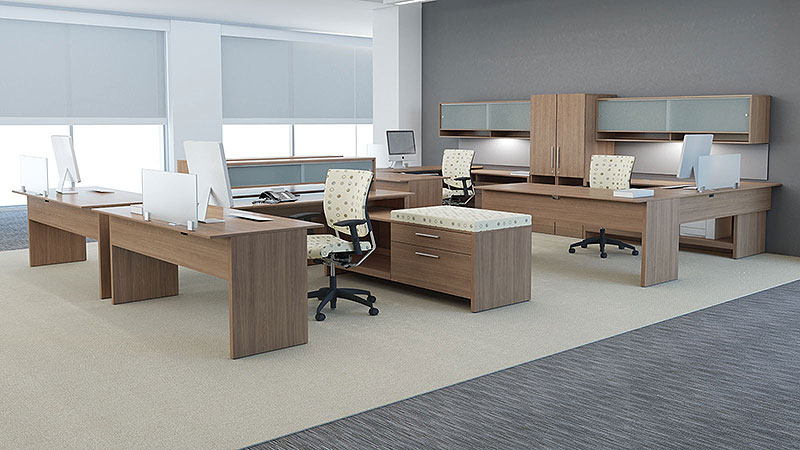
National Tessera Desks and Workstations
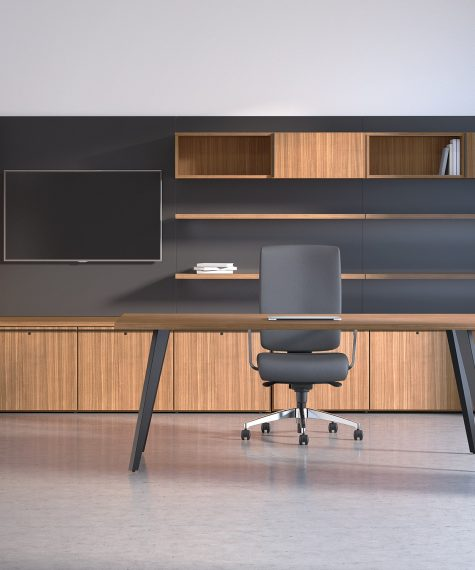
Modular Tables for Meetings and Collaboration
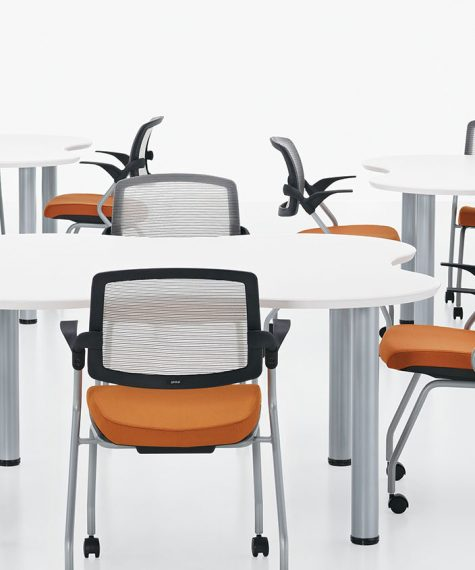
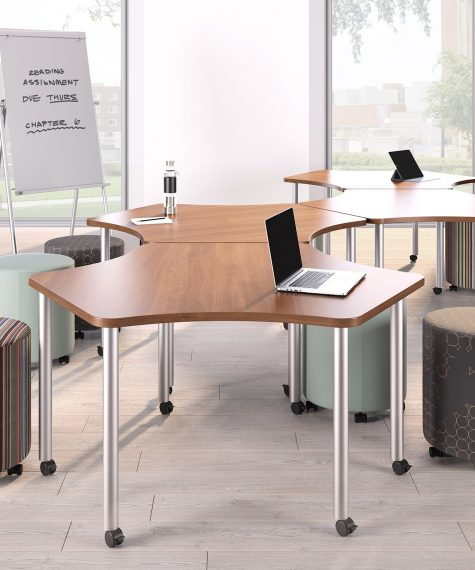
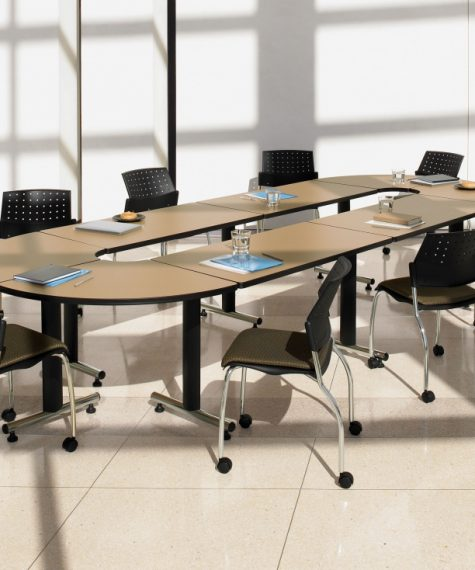
Meeting spaces benefit significantly from modular office furniture because usage needs vary so widely from day to day. A single large boardroom table cannot easily become four small breakout tables, but a set of modular tables can. Businesses can combine tables for larger meetings and separate them for training sessions, client consultations, or smaller team discussions.
The Office Shop’s modular tables collection includes options built specifically for this kind of flexible use, giving businesses meeting spaces that adapt to the agenda rather than the other way around.
Consider the following products within this category:
Global Zook Collaborative Educational Tables
National Maneuver Collaborative Table
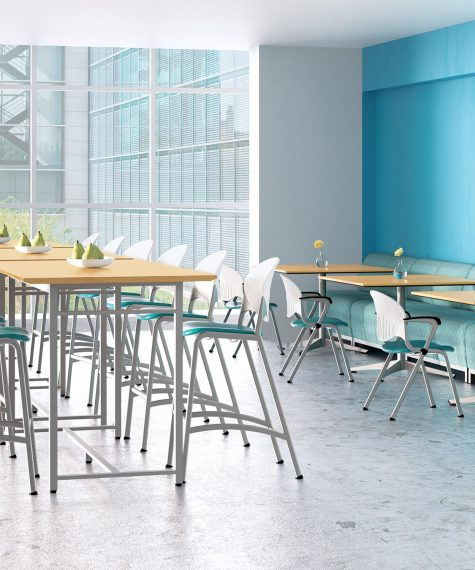
Global Connectables Modular Tables
Modular Partitions and Privacy Solutions
Open offices improve collaboration, but they also create a need for privacy when it is required. Modular partitions solve this by giving businesses a way to create semi-private or fully enclosed spaces without permanent construction.
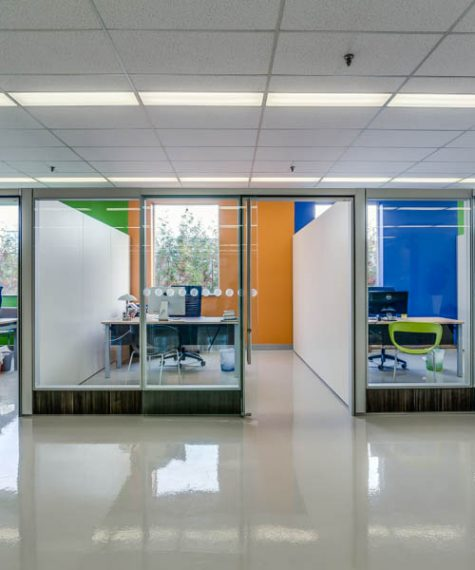
Free-standing partition systems, such as The Office Shop’s IMT free-standing modular partitions, can be positioned to define team areas, reduce noise, or create quick meeting alcoves, then relocated as the layout evolves. This is particularly valuable for businesses that want the openness of a collaborative floor plan while still supporting focused, heads-down work.
IMT free-standing modular partition
Modular Storage and Filing
Storage needs shift constantly as businesses digitize records, adopt hybrid schedules, and reorganize teams. Modular storage components, including mobile pedestals, shared filing units, and modular shelving, allow businesses to scale storage up or down without redesigning the entire office.
Many of our clients pair modular workstations with modular storage to keep the layout consistent as departments reorganize.
Consider the following products within this category:
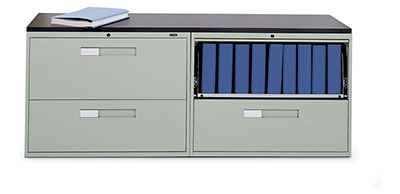
Global Filing/Storage 9100 Series Lateral
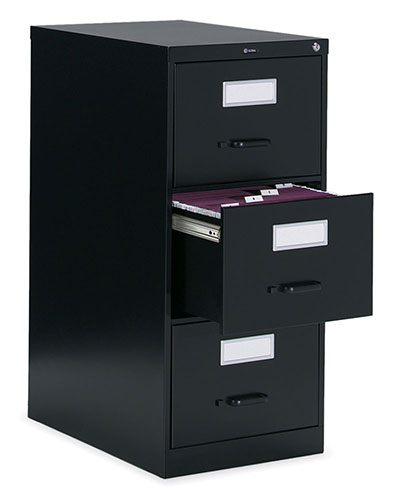
Global Filing/Storage 2600 Plus Vertical
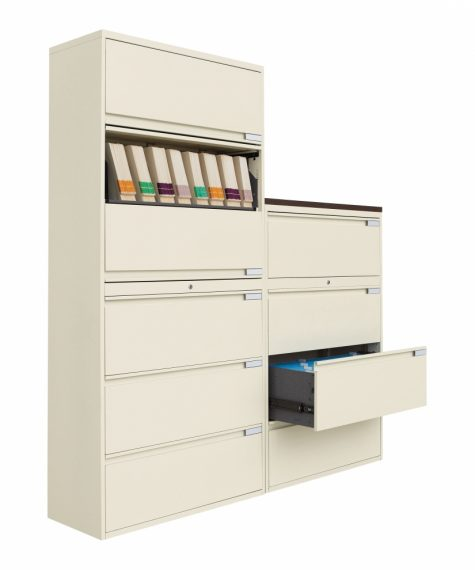
Global 1200 Series Metal Filing
The Sustainability Case for Modular Office Furniture
Sustainability has become a real factor in office furniture purchasing decisions, and modular office furniture holds up well under that scrutiny. Because modular systems are built to be repaired and reconfigured rather than replaced, businesses generate significantly less waste over the life of the furniture. A worn desktop panel or an outdated partition can be swapped out on its own, instead of sending an entire workstation to a landfill.
This component-level approach also extends the useful life of the original investment. A modular system purchased today can often absorb a decade or more of layout changes, expansions, and downsizing without losing its core structure.
For businesses tracking environmental, social, and governance goals, or simply looking to reduce the cost and waste associated with frequent office renovations, modular office furniture offers a measurable advantage over disposable, single-use setups.
Manufacturers that supply modular office furniture to The Office Shop, including Global Furniture Group and Groupe Lacasse, also design their systems with recyclable materials and long parts-availability windows in mind. That means businesses are not just buying flexible furniture today, they are buying into a system that manufacturers continue to support for years after the original purchase.
→ Interested in a workspace strategy that supports both flexibility and sustainability goals? Ask The Office Shop how modular office furniture fits into a longer-term facilities plan.
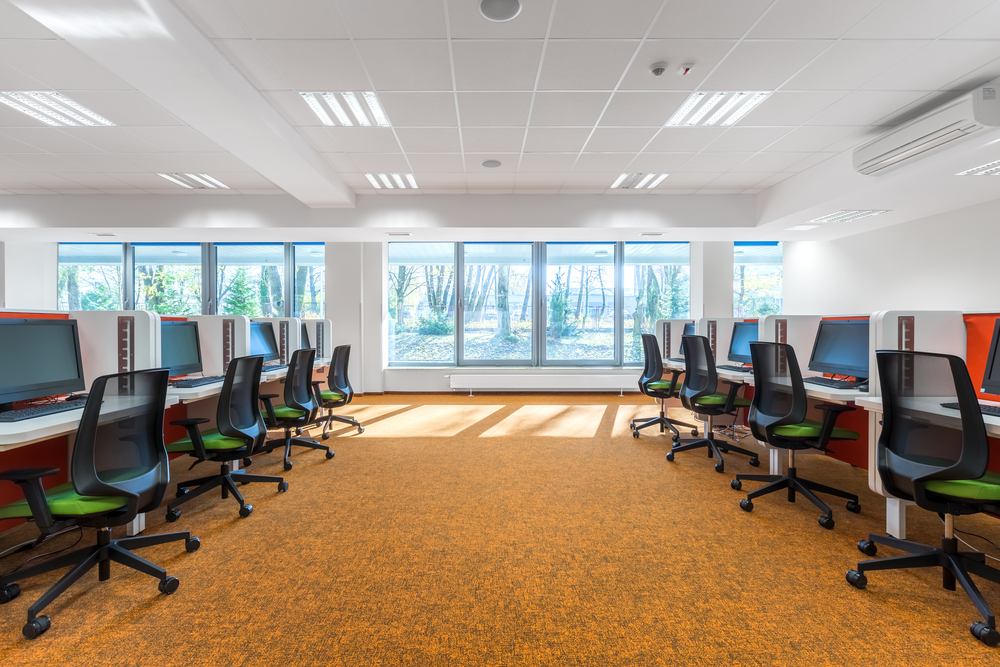
Modular Office Furniture by Industry
Modular office furniture is not limited to corporate headquarters. Because it adapts to different space requirements and workflows, it performs well across a wide range of industries.
Professional Services and Corporate Offices
Law firms, accounting practices, and financial services companies often need a mix of private offices, open workstations, and formal meeting spaces within the same footprint. Modular office furniture allows these businesses to maintain a polished, professional appearance while still having the flexibility to adjust as staffing or client needs change.
Our commercial office furniture solutions are frequently specified for exactly this kind of layout, combining executive furniture with modular benching for support staff.
Healthcare Facilities
Medical clinics, dental offices, and healthcare administration spaces need furniture that supports both patient-facing areas and staff workflows. Modular office furniture makes it easier to adjust reception areas, consultation rooms, and administrative workstations as patient volume or service offerings change, without disrupting a fully operational facility.
The Office Shop’s experience with healthcare environments means we understand the durability, cleanability, and layout requirements specific to medical settings.
Education Institutions
Schools, colleges, and universities frequently need to repurpose administrative and shared spaces for different uses throughout the academic year. Modular office furniture supports this by allowing staff workstations, meeting areas, and shared resource spaces to be reconfigured between semesters or as enrollment changes. Our work with educational institutions across Ontario has shown how much value modular systems add to administrative spaces that need to stay functional year over year.
→ Not sure how modular office furniture would apply to your industry’s specific requirements? Contact The Office Shop to discuss furniture solutions built around your operations.
How to Plan a Modular Office Furniture Layout
Investing in modular office furniture works best when it is part of a deliberate plan rather than a piecemeal purchase. A few principles consistently lead to better outcomes.
Start With a Space Plan
Before selecting furniture, it helps to understand how the available square footage will actually be used. A proper space plan accounts for workstation density, walkways, meeting areas, and shared amenities, and identifies where modular components can add the most flexibility. Businesses that skip this step often end up with furniture that fits the room but not the workflow.
Match Furniture to How Your Team Works
Modular office furniture should reflect actual work patterns, not assumptions about them. A sales team that spends most of its time on calls needs different configurations than a design team that collaborates constantly around shared tables.
Reviewing how employees currently use the space, including which areas go unused and which are consistently in demand, helps determine which modular components will deliver real value.
Plan for Future Growth
One of the biggest advantages of modular office furniture is the ability to expand without starting over. When planning a layout, it is worth considering headcount projections for the next two to three years, not just current staffing. Leaving room within a modular system to add workstations, storage, or partitions later avoids the cost and disruption of a premature redesign.
Businesses planning a larger transition, such as a full office move, often combine modular furniture planning with our moving and relocation management services to coordinate timing and minimize downtime.
→ Ready to turn your office plan into a working layout? Ask The Office Shop for a space planning consultation before your next furniture purchase.
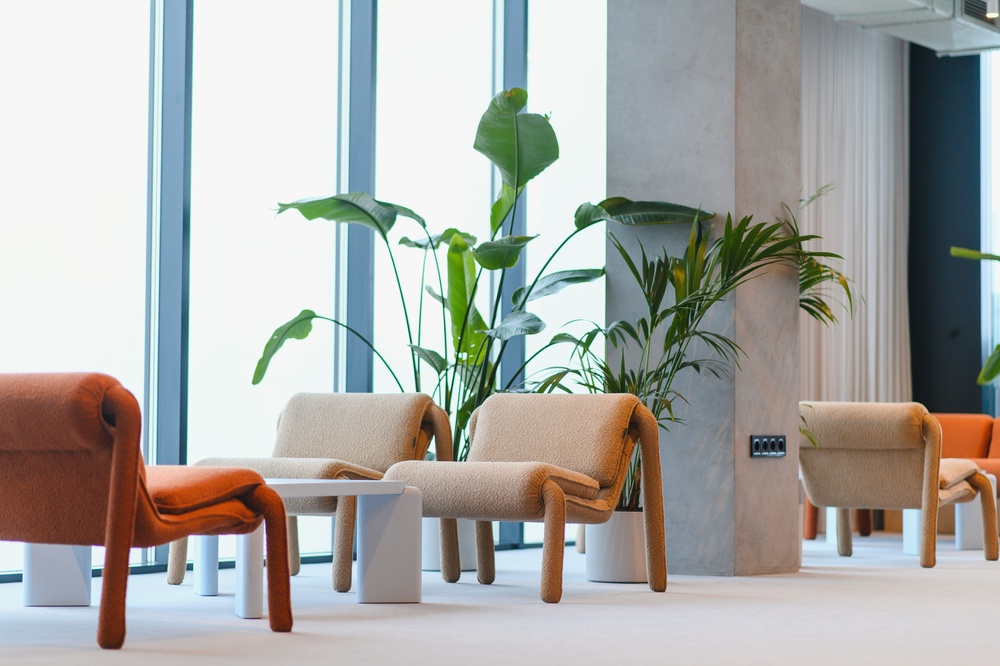
Modular Office Furniture vs Traditional Fixed Furniture
Businesses evaluating modular office furniture often want to understand how it actually compares to traditional, fixed furniture setups.
Traditional furniture is typically purpose-built for a specific layout. Desks are sized for a particular room, partitions are constructed as permanent walls, and storage is installed to match a fixed floor plan. This can work well for businesses that do not expect their layout to change. However, it becomes a liability the moment a business grows, restructures, or adopts a new way of working, since changes usually mean demolition, custom carpentry, and significant expense.
Modular office furniture takes a different approach. Because components are designed to be reconfigured rather than replaced, businesses gain the ability to respond to change quickly. This does not mean modular furniture sacrifices quality or appearance.
Modern modular systems, including the products The Office Shop sources from manufacturers such as Global Furniture Group and Groupe Lacasse, are built to the same commercial-grade standards as fixed furniture, with the added benefit of long-term adaptability.
The right choice depends on how much change a business expects. Organizations with stable, long-term layouts may still choose select fixed elements for executive offices or reception areas. Businesses anticipating growth, reorganization, or hybrid scheduling almost always benefit from a modular-first approach.
→ Still weighing modular versus fixed furniture for your office? Talk to The Office Shop about which approach fits your growth plans.
Choosing the Right Modular Office Furniture Partner
Selecting modular office furniture is only part of the process. The value of a modular system depends heavily on how well it is planned, sourced, and installed.
A qualified partner should be able to walk through your current space, understand your team’s workflow, and recommend components that solve real operational problems rather than simply filling a floor plan.
This is where working with an experienced office furniture consulting team makes a measurable difference. At The Office Shop, our consultants assess space utilization, growth plans, and budget before recommending specific modular products, so businesses avoid overbuying or under-planning.
Sourcing matters as well. Modular systems from established Canadian manufacturers tend to offer better parts availability and longer product lifecycles, which matters when a business plans to expand a system years after the original purchase.
Installation is the final piece. Even well-chosen modular office furniture underperforms if it is assembled incorrectly or positioned without regard for workflow, lighting, or acoustics. Professional installation ensures the system performs the way it was designed to, from day one.
For businesses weighing new furniture against pre-owned options to manage budget, our rentals, used products, and consultations service provides a practical path to modular systems at a range of price points.
The Office Shop has worked with businesses across Toronto, Markham, Mississauga, and the wider GTA since 1996, helping organizations plan, source, and install modular office furniture systems that continue to work as the business changes. Businesses that also need ergonomic support alongside their modular layout can explore our ergonomic solutions to round out a workspace built for comfort as well as flexibility.
→ Looking for a furniture partner who can manage your project from planning through installation? Contact The Office Shop to get started.

Conclusion
Modular office furniture gives businesses a practical way to build a workspace that can change as quickly as the business does. From modular desks and tables to partitions and storage, these systems reduce long-term costs, shorten reconfiguration timelines, and support the hybrid work patterns most offices now rely on.
Whether you are planning a new office, updating an existing layout, or preparing for growth, modular furniture provides flexibility that traditional fixed setups cannot match.
The Office Shop has spent nearly three decades helping Ontario businesses plan and install workspaces that perform. If you are ready to explore what a modular layout could look like for your team, our consultants are here to help.
Modular Office Furniture: FAQs
What is modular office furniture?
Modular office furniture is a system of interchangeable components, such as desks, tables, partitions, and storage units, that can be combined, rearranged, or expanded to adapt to a business’s changing needs without replacing the entire setup.
Unlike furniture purchased as a fixed, one-off set, modular pieces are engineered to share consistent connection points, panel heights, and finishes, so components purchased at different times still fit together cleanly. This means a business can start with a smaller footprint and build out the same system over several years rather than committing to a single, unchangeable layout on day one.
Is modular office furniture more expensive than traditional furniture?
Initial costs are often comparable to traditional furniture, but modular office furniture typically saves money over time because businesses can replace or add individual components instead of purchasing an entirely new setup when needs change.
With traditional fixed furniture, a layout change or a growing team often forces a business to replace desks, walls, or storage that are still perfectly functional simply because they no longer fit the new configuration. Modular systems avoid that waste by allowing targeted upgrades. A business might extend an existing benching run, add a partition, or swap in additional storage without touching the rest of the system.
How long does it take to reconfigure a modular office furniture layout?
Most modular systems can be reconfigured in a matter of days, and sometimes a single weekend, since components are designed to be disassembled and reassembled with basic tools rather than requiring construction.
This is a major difference from traditional office renovations, which often involve contractors, permits, and weeks of disruption to accommodate framing, electrical work, or custom millwork. Because modular office furniture connects through standardized hardware, an experienced installation team can move partitions, extend workstation runs, or reorganize storage with minimal noise, dust, or downtime.
Can modular office furniture support a hybrid work model?
Yes. Modular office furniture is well suited to hybrid work because it allows businesses to shift between open collaboration areas, shared workstations, and private focus spaces as attendance and team needs change throughout the week. Hybrid schedules mean office occupancy can vary significantly from one day to the next, and a fixed layout built around a single headcount often leaves space either underused or overcrowded depending on the day.
What industries benefit most from modular office furniture?
Professional services, healthcare, education, and corporate offices all benefit, since each of these industries regularly needs to adjust layouts to accommodate changing staffing levels, patient or student volume, and evolving workflows. Professional services firms often need to balance private offices with open workstations as client rosters and team sizes shift. Healthcare facilities need to adapt reception, consultation, and administrative spaces as patient volume or services offered change over time.
Educational institutions frequently repurpose administrative and shared spaces between semesters or as enrollment fluctuates. Beyond these core industries, modular office furniture also performs well for technology companies, coworking operators, and any growing organization where headcount and space requirements are difficult to predict more than a year or two in advance, making flexibility a practical necessity rather than a convenience.
Does modular office furniture look less professional than custom-built furniture?
No. Modern modular systems are designed with cohesive finishes, consistent hardware, and commercial-grade materials, so a well-planned modular layout looks just as polished as a custom-built office. Manufacturers that supply modular office furniture, including the Canadian brands The Office Shop works with, invest heavily in design detailing, from clean cable management to matched laminate and veneer finishes across every component in a system.
Can I mix modular office furniture with existing pieces?
In many cases, yes, particularly for storage and seating. However, core structural components like workstations and partitions typically work best within a single modular system to maintain compatibility during future reconfigurations. Freestanding items such as guest chairs, lounge seating, occasional tables, and standalone storage units generally integrate well alongside a modular system since they do not rely on shared connection points.
How do I know if modular office furniture is right for my business?
If your business expects to grow, reorganize, or continue supporting hybrid work, modular office furniture is generally a strong fit. A space planning consultation can help determine which components make the most sense for your specific layout and budget. Businesses with very stable, unchanging headcounts and no plans for renovation or relocation may find less immediate benefit from a fully modular system, though even these organizations often still choose modular elements for meeting spaces or storage where flexibility adds value.
Get A Free Office Furniture Consultation

Let's Talk with Our Experts
1-877-305-9955  or
or

Category
Recent Posts
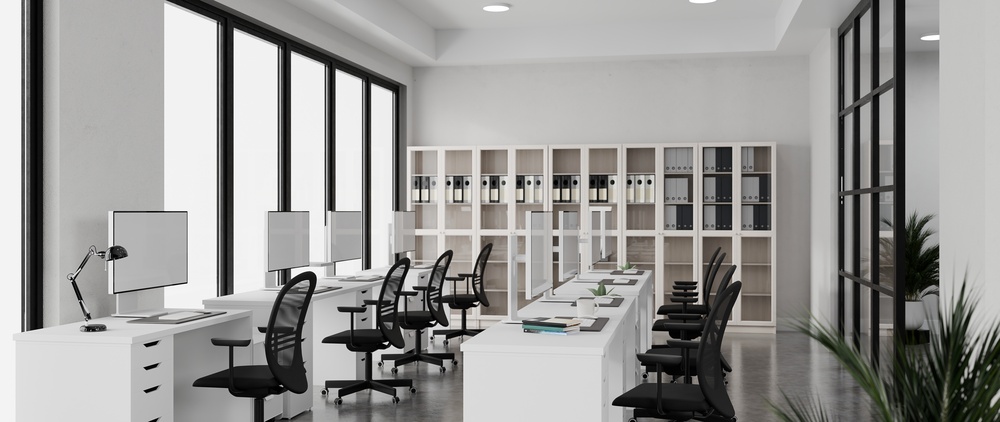
Office Desks With Drawers: How The Office Shop Plans Storage Into Every Workstation
Design Services, Brochures & Guides
Oct 21 2026 

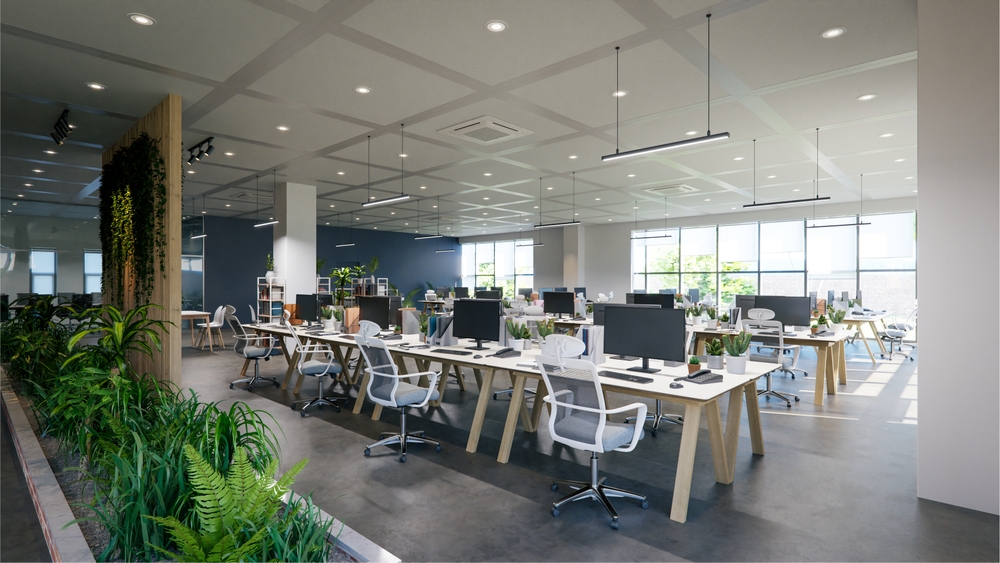
Coworking Space Furniture: How The Office Shop Helps Operators Build Flexible, Durable Spaces
Design Services, Brochures & Guides
Oct 9 2026
Office Furniture Reconfiguration: How The Office Shop Helps You Reuse What You Already Own
Design Services, Brochures & Guides
Oct 2 2026
[Find A Consultant]
We service all across Canada


Office Furniture Mississauga Ontario 


Office Furniture Brampton Ontario


Office Furniture Markham Ontario

Office Furniture North York Ontario



Office Furniture Hamilton Ontario

Office Furniture Scarborough Ontario

Office Furniture Etobicoke Ontario

Office Furniture Pickering Ontario

Office Furniture Ajax Ontario

Office Furniture Milton Ontario

Office Furniture Whitby Ontario

Office Furniture Richmond Hill Ontario

Office Furniture Oshawa Ontario

Aurora Office Furniture Ontario

Office Furniture Guelph Ontario

Office Furniture Cambridge Ontario

Office Furniture St. Catharines Ontario

Office Furniture Woodbridge Ontario
[FREE consultation]
Complete for a FREE consultation
with a furniture design specialist!
Links
Contact Us
 Call Us
905-305-9955
 Location
366 Denison St, Markham, ON L3R 1B9, Canada
Request Our Lookbook
SEND REQUEST
Sitemap | Copyright @ 2025 The Office Shop
Digital marketing and CRM solutions, engineered by Consultus Digital